
She’ll change your life
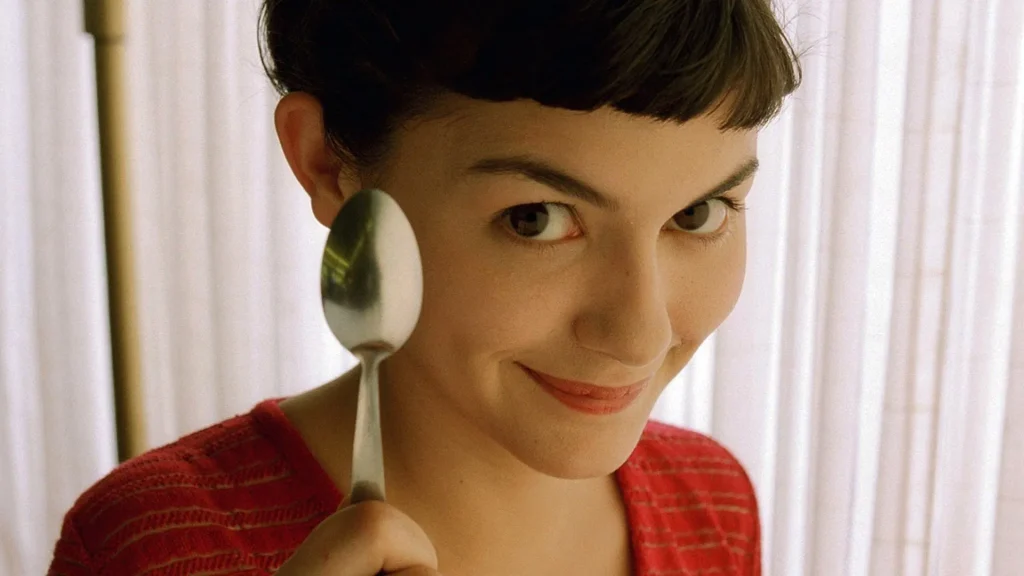
Image courtesy of TMDb – Amélie (2001), Gaumont.
Will the girl behind the scenes start living her life as the main character? Amélie follows the story of a shy young woman with a quiet passion for putting good out into the world.
From orchestrating secret acts of kindness, to playing matchmaker, Amélie finds joy in life’s smallest details. She learns to conquer her fears and open her heart – finally stepping into the light of her own story
The movie offers a subtle look at how small gestures can impact the lives of others, while also tackling the feeling of living behind the curtain in one’s own life – the aches & pains of “secondary character syndrome”
The film successfully explores several themes through Amélie’s subjective lens. Amélie was deprived of social interactions from an early age. Believing she has a bad heart, her father insisted she be homeschooled by her short tempered mother. After her mother’s death, Amélie’s father had withdrawn himself emotionally, never really tending to her social needs. Growing up feeling like an outsider, Amélie discovered a sense of purpose in living behind the curtain. She was the unseen “kismet” of those she helped; seeing the happiness her good deeds brought, Amelie made it her mission to help people overcome obstacles.
In the midst of her honorable quest, she falls in love with Nino Quincampoix, who’s charmed by her witty cat and mouse game and her mysterious aura. With secret rendezvous and cryptic messages, Amélie finds herself at a crossroads – to confront her fear of rejection and step into the light, or to continue lurking in the shadows. In the end, she overcomes her fear, opens her heart, and steps into her own story – embracing love, connection, and the joy of living as the protagonist of her life.
Amélie’s childlike innocence shines through her quirky imagination, and the film’s exaggerated cartoon-like visual effects, which enhance the overall atmosphere of the film and reflect her character.
The film initially portrays her as the world’s observer, a secret presence lurking in the shadows. This is because she was sheltered from social interactions as a child. A result of that is her constant fear of rejection and the struggle to connect with others.
Amélie shows her compassion in a quiet and indirect manner. She projects her happiness and unique outlook on life onto others: with small acts of kindness. Eventually, in her altruistic quest, she finds herself falling in love. Her world is turned upside down and her instinct to hide transforms into courage, as she embraces connection and opens her heart.
Her journey demonstrates that we should put good out into the world, and that good will return to us.
1) Dominique Bredoteau
Returning the time capsule to the man who lived in her apartment in the 50’s was a simple gesture that reignited memories of childhood innocence. It also set Amélie on a honorable mission of kindness, serving as a central part of her character arc.
2) Collignon
Amélie had a strong sense of justice. When mean greengrocer Collignon spread negativity toward his employees and customers, she gave him a taste of his own medicine. Through a series of playful, innocent pranks, Collignon got the “karma” he deserved. This reveals Amélie’s cleverness, and creative sense of morality
3) Raphaël Poulain
Seeing her father bad been self – isolating & grown attached to a garden gnome, Amélie took it upon herself to encourage him to go out more, travel. She sent him pictures of the gnome “travelling” across different places. This reveals her compassion, as well as imaginative skills – and her method worked.
The color palette in the film enhances its whimsical, romantic and fairytale-like atmosphere. The use of red in Amélie’s wardrobe and apartment design was associated with passion, love, and warmth. Yellow contributed to creating a nostalgic atmosphere, reminiscent of her childhood, while green was used as a counterpoint to the bold reds, suggesting vitality.
Cinematographer Bruno Delbonnel draws us into Amélie’s whimsical, everyday world. Extreme close-ups create intimacy, connecting the audience to the protagonist. Playful camera movements – pans, zooms, dollies – keep the story flowing. The dynamism provided through camera movement is key to how we experience and engage with the film. The picturesque streets of Montmartre are brought to life through these dynamic, fluid camera movements, highlighting the charm and magic of Amélie’s world.
Storytelling is also key of how we engage with Amelie. The movie opens with a series of vignettes, that quickly sketch her childhood . The omnipresent narrator intervenes when characters are introduced and offers the audience pieces of information that distinguish each of them. Moreover, the narrator’s voice adds to the fairytale-esque feel of the movie. He often gives hints, keeping the audience entertained.
Amelie offers a unique perspective on cherishing the little things in life. The film’s otherworldly aesthetics and storyline help convey this overall message. By the end, Amelie’s character development was centered around her courageous journey: she became more than a simple, altruistic observer of other’s lives, and started writing her own story.